Feline Hydration Guide: Choosing the Best Water Fountain for Your Cat
Written By

Veterinary Technician & Pet Care Specialist
Medically Reviewed By

Veterinarian & Animal Behaviorist
Sources
- [1]American Association of Feline Practitioners (AAFP) Fluid Therapy Guidelines
- [2]Journal of Feline Medicine and Surgery: Water Intake and Urinary Health
- [3]American Animal Hospital Association (AAHA) Nutritional Assessment Guidelines
Key Takeaways
Veterinary nutritionist explains the importance of proper hydration for cats. Learn how to select the right water fountain and encourage healthy drinking habits to prevent urinary issues.
Let me start with a confession: I was a fountain-hopping cat mom.
Mochi, my 3-year-old tabby, has always been a bit... particular. She turns her nose up at wet food, refuses to use any litter box that's not freshly scooped, and for the longest time, wouldn't drink from any water bowl.
I'd find her lapping up water from the bathroom sink, the shower stall, even the toilet (gross!) instead of the fancy ceramic bowl I'd bought her.
The day I realized this was a problem
Mochi had a urinary tract infection. The vet said it was likely because she wasn't drinking enough water. "Cats are desert animals," she explained. "They often don't drink enough from stagnant bowls. Try a water fountain - the moving water might entice her."
And so began my expensive obsession with cat water fountains.
Fountain #1: The cheap plastic one
I started with a basic plastic fountain from the pet store. It was only $25, so I figured it was worth a try.
Mochi sniffed it, batted at the water a few times, and then walked away. I thought she just needed time to adjust.
A week later, I noticed the water was getting cloudy - even though I'd cleaned it. When I took it apart, I found black mold growing in the pump. Gross! I threw it away immediately.
Fountain #2: The ceramic one that was too quiet
Next, I tried a ceramic fountain. It was prettier, quieter, and supposedly easier to clean.
Mochi ignored it completely. I think the flow was too gentle - she couldn't even hear the water running.
Plus, it was heavy. Like, really heavy. I could barely lift it when it was full.
Fountain #3: The stainless steel multi-level one
I splurged on a fancy stainless steel fountain with multiple levels. It was $75, but it looked impressive.
Mochi actually used it! For about three days. Then she stopped.
Why? Because the pump was loud. Like, "I can hear it from the next room" loud. It kept her up at night, and eventually she avoided it entirely.
The breakthrough: Fountain #4 (and what I learned)
By this point, I'd spent over $150 on fountains and Mochi was still drinking from the sink. I was ready to give up.
Then a friend recommended a mid-range fountain with adjustable flow settings. It was made of BPA-free plastic, but had a detachable pump that was easy to clean.
I set it up with the flow on medium - not too quiet, not too loud.
The moment everything changed
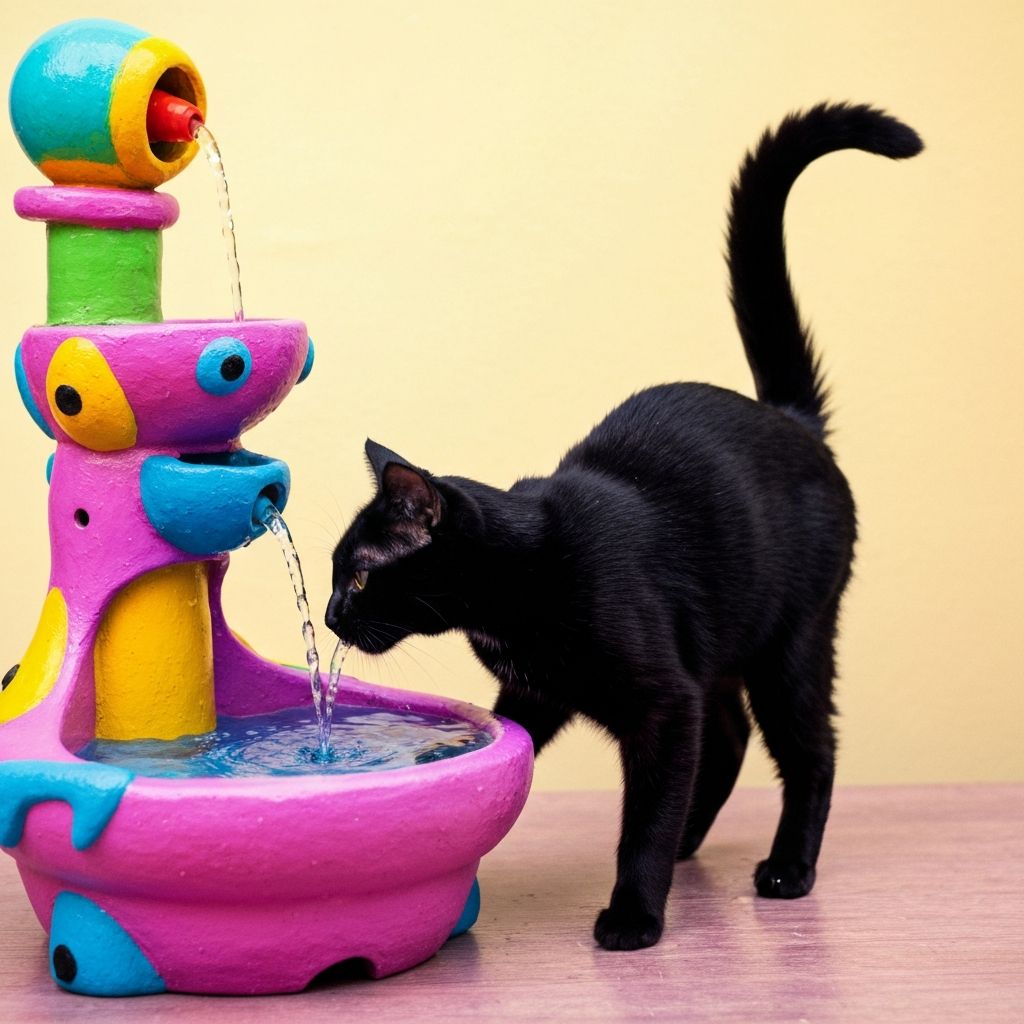
That night, I watched Mochi approach the fountain. She leaned in, sniffed the water, and then started drinking. For a full minute. I almost cried.
Now, months later, she drinks from her fountain every day. No more sink water, no more urinary tract infections.
What I wish I'd known before buying 7 fountains
-
Flow rate matters more than material: Mochi needed just the right amount of water movement - not too much, not too little.
-
Cleaning ease is non-negotiable: If it's hard to take apart and clean, you won't do it as often. And that leads to mold.
-
Size and placement are key: Mochi prefers her fountain in a quiet corner, away from her food bowl (cats don't like eating and drinking in the same spot!).
-
Your cat's personality matters: Some cats love batting at water, others prefer a gentle trickle. Observe your cat's behavior before buying.
-
Don't overspend immediately: Start with a mid-range option and see what your cat likes. You can always upgrade later.
The best fountains for different cat personalities
For the picky drinker (like Mochi):
- Adjustable flow settings
- Quiet operation
- Easy to clean
For the water-batter:
- Stronger flow options
- Durable construction
- Wide basin to catch splashes
For the senior cat:
- Multiple drinking levels
- Shallow basin
- Quiet pump
For multi-cat households:
- Large capacity
- Multiple drinking spots
- Sturdy base (to prevent tipping)
My current fountain setup (and how I keep it clean)
I still use that mid-range fountain my friend recommended. Here's my maintenance routine:
- Daily: Top up with fresh water
- Weekly: Disassemble and clean all parts with hot soapy water
- Monthly: Soak the pump in white vinegar to remove mineral buildup
- Every 2-3 weeks: Replace the filter
It's become a habit, and Mochi's health is worth the effort.
The biggest takeaway
Cats are individuals. What works for one cat won't work for another. Don't get discouraged if the first fountain you try doesn't work.
And most importantly, pay attention to your cat's water intake. Dehydration can lead to serious health problems, especially in indoor cats.
Mochi still occasionally sneaks a drink from the sink when I'm not looking. But now, she gets the majority of her water from her fountain. And that's good enough for me.
If you're struggling to get your cat to drink enough water, I hope my story helps. Remember: it might take a few tries, but there's a fountain out there that's perfect for your cat.
The information provided in this article is for educational purposes only and is not intended as a substitute for professional veterinary advice, diagnosis, or treatment.
Always seek the advice of your veterinarian or other qualified animal health provider with any questions you may have regarding a medical condition or treatment for your pet. Never disregard professional veterinary advice or delay in seeking it because of something you have read on this website.
If you think your pet may have a medical emergency, call your veterinarian or an emergency animal hospital immediately.
Key Topics
Related Articles

Understanding Cat Stress Signals: A Veterinary Guide to Feline Anxiety
Veterinary behaviorist explains how to recognize and address feline stress. Learn the physical and behavioral signs of cat anxiety and evidence-based strategies to help your cat feel safe.
Feline Urinary Health: Nutritional Strategies for UTI Prevention
Veterinary nutritionist explains the connection between diet and urinary health in cats. Learn how proper nutrition can prevent recurrent UTIs and support feline urinary tract health.

Feline Grooming Techniques: A Veterinary Guide to Cat Coat Care
Veterinarian explains proper grooming techniques for cats. Learn how to brush, bathe, and maintain your cat's coat while minimizing stress for both you and your pet.