Understanding Cat Stress Signals: A Veterinary Guide to Feline Anxiety
Written By

Veterinarian & Animal Behaviorist
Medically Reviewed By
Veterinarian & Animal Behaviorist
Sources
- [1]American Association of Feline Practitioners (AAFP) Feline Behavior Guidelines
- [2]Journal of Feline Medicine and Surgery: Stress and Welfare in Cats
- [3]International Society of Feline Medicine (ISFM) Environmental Needs Guidelines
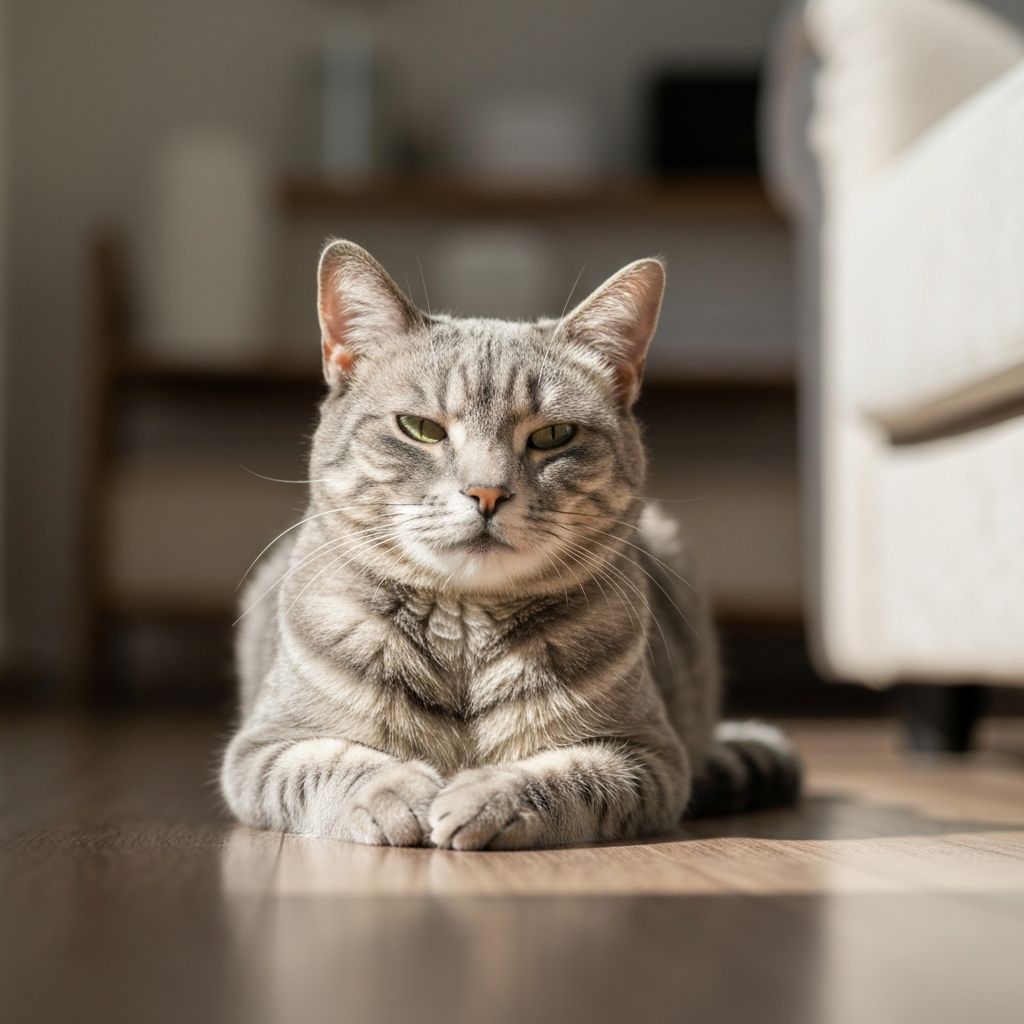
Key Takeaways
Veterinary behaviorist explains how to recognize and address feline stress. Learn the physical and behavioral signs of cat anxiety and evidence-based strategies to help your cat feel safe.
Let me set the scene: it was moving day.
I'd just brought my 3-year-old tabby, Luna, to our new apartment. I'd done everything the "experts" said - kept her carrier covered, set up her favorite bed and litter box first, even brought her old scratching post. But within 24 hours, everything fell apart.
Luna stopped eating. She started hiding under the bed all day. And then, to top it all off, she peed on my brand new couch. I was devastated. I thought I'd done everything right, but clearly something was very wrong.
That's when I realized I had no idea how to read my cat's stress signals. I'd always thought of her as the calm, independent type - the kind of cat who doesn't get fazed by much. But I was wrong.
The first mistake: I thought cats were "low-maintenance"
Let me be honest: before this happened, I bought into the stereotype. I thought cats were just... there. They sleep a lot, they groom themselves, they don't need as much attention as dogs. Right?
Wrong. So wrong. Luna showed me just how sensitive cats can be. Those first few days in the new apartment, I could see the tension in her body - her tail was twitching constantly, her pupils were huge even in bright light, and she'd flinch at the slightest noise.
But I didn't know what those signs meant. I just thought she was "adjusting."
The turning point: when I finally started paying attention
It was day 5, and Luna still hadn't touched her food. I was starting to panic, so I called my vet. She asked me a million questions about Luna's behavior - things I hadn't even noticed.
"Is she grooming more than usual?" No, actually, she'd stopped grooming entirely. "Does she seem more vocal?" Yes! She'd been meowing in this high-pitched, anxious way I'd never heard before. "Is she hiding in unusual places?" Oh yeah - she'd found a spot behind the washing machine that I didn't even know existed.
That's when it clicked. Luna wasn't just "adjusting" - she was stressed. Like, really stressed.
What I learned about cat stress signals
Over the next few weeks, I became a student of Luna. I watched her every move, and I started to notice patterns I'd never seen before.
The physical signs I missed
- Dilated pupils: Even in bright sunlight, Luna's eyes looked huge and round. I now know this is a classic sign of anxiety.
- Flattened ears: When someone knocked on the door, her ears would press back against her head like she was trying to make herself smaller.
- Crouched posture: If I tried to approach her under the bed, she'd hunch down low to the ground, ready to run or fight.
- Loss of appetite: This was the biggest red flag, and I almost missed it because I thought she was just being picky.
The behavioral clues I ignored
- Hiding: Luna had always liked napping in quiet spots, but now she was hiding 24/7 - even skipping meals to stay under the bed.
- Changes in grooming: One day I noticed her fur looked messy - something that never happened with my super-clean cat.
- Inappropriate elimination: That couch incident? Yeah, that was her way of telling me she felt unsafe in her new environment.
What actually helped (and what didn't)
I tried a lot of things in those first few weeks. Some worked, some didn't.
What didn't work:
- Forcing her to come out: I tried tempting her with treats, but that just made her more scared.
- Ignoring the problem: I thought she'd "get over it," but she only got worse.
- Changing her litter box: I thought maybe she didn't like the new one, but that just added another stressor.
What actually worked:
- Creating a safe space: I set up a small room just for her - with her bed, litter box, food, and water. I kept the door closed so she could have a quiet place to herself.
- Vertical space: I put a cat tree near the window so she could look outside and feel like she was in control of her environment.
- Feliway diffuser: This was a game-changer. Within a few days of plugging it in, I noticed Luna starting to relax a little.
- Patience: This was the hardest part. I wanted her to bounce back immediately, but it took weeks.
The day things started to turn around
It was about 3 weeks in. I was sitting on the floor near her safe space, reading a book, when she cautiously stepped out. She didn't come all the way to me, but she sat at the edge of the room and watched me. After a few minutes, she even took a few bites of food.
I almost cried. It was such a small victory, but it felt huge.
What I wish I'd known sooner
Looking back, I realize I made a lot of mistakes. But I also learned a lot about cats - and about being a better pet parent.
- Cats are not "low-maintenance": They have complex emotional lives, and they need just as much attention and care as dogs.
- Stress affects physical health: Luna's loss of appetite could have led to serious health issues if I hadn't intervened.
- Small changes matter: Something as simple as a new piece of furniture or a different feeding time can stress a cat out.
- Patience is everything: Cats need time to adjust, and pushing them only makes things worse.
How Luna is doing now
Fast forward 6 months: Luna is back to her old self. She sleeps on my bed again, she plays with her toys, and she even greets me at the door when I come home.
But I see her differently now. I notice when her tail starts twitching. I pay attention when she retreats to her favorite hiding spot. I know when she's feeling overwhelmed, and I respect her need for space.
My advice to other cat owners
If you think your cat might be stressed:
- Trust your gut: If something feels off, it probably is.
- Watch for the small signs: The twitchy tail, the dilated pupils, the change in grooming habits.
- Create a safe space: Every cat needs a place where they can feel completely secure.
- Don't be afraid to ask for help: If your cat's behavior doesn't improve, call your vet. They can rule out medical issues and give you guidance.
Remember, your cat can't talk to you, but they are communicating. You just need to learn how to listen.
And if you're going through a stressful time with your cat right now? Hang in there. It gets better. I promise.
The information provided in this article is for educational purposes only and is not intended as a substitute for professional veterinary advice, diagnosis, or treatment.
Always seek the advice of your veterinarian or other qualified animal health provider with any questions you may have regarding a medical condition or treatment for your pet. Never disregard professional veterinary advice or delay in seeking it because of something you have read on this website.
If you think your pet may have a medical emergency, call your veterinarian or an emergency animal hospital immediately.
Key Topics
Related Articles
Feline Hydration Guide: Choosing the Best Water Fountain for Your Cat
Veterinary nutritionist explains the importance of proper hydration for cats. Learn how to select the right water fountain and encourage healthy drinking habits to prevent urinary issues.
Feline Urinary Health: Nutritional Strategies for UTI Prevention
Veterinary nutritionist explains the connection between diet and urinary health in cats. Learn how proper nutrition can prevent recurrent UTIs and support feline urinary tract health.
Feline Grooming Techniques: A Veterinary Guide to Cat Coat Care
Veterinarian explains proper grooming techniques for cats. Learn how to brush, bathe, and maintain your cat's coat while minimizing stress for both you and your pet.