Understanding Feline Body Language: A Complete Guide
Written By

Veterinarian & Animal Behaviorist
Medically Reviewed By
Veterinarian & Animal Behaviorist
Sources
- [1]American Association of Feline Practitioners (AAFP) Behavior Guidelines
- [2]Journal of Feline Medicine and Surgery: Feline Communication
- [3]International Society of Feline Medicine (ISFM) Behavior Resources

Key Takeaways
Veterinary behaviorist explains how to interpret cat body language and communication. Learn to recognize stress signals, affection cues, play invitations, and warning signs.
How I Learned to Speak Cat: Decoding My Feline Friend's Language
I'll never forget the day I brought Mochi home. She was a 10-week-old Siamese mix with striking blue eyes and a feisty personality. I thought I knew everything there was to know about cats, but I quickly realized I had a lot to learn.
One day, I tried to pet Mochi while she was resting, and she swatted at me with her paw. I was confused - I thought she liked being petted. It wasn't until later that I realized I had missed her body language signals that she didn't want to be touched.
This experience taught me the importance of learning to read a cat's body language. Here's my story of how I learned to "speak cat" and the lessons that strengthened our bond.
The Early Mistakes
In those first few months with Mochi, I made a lot of mistakes. I misread her signals all the time:
The Tail Misconception
I thought a wagging tail always meant the same thing as a dog's - happiness. But I quickly learned that a cat's tail tells a different story.
One day, Mochi was sitting on the couch, swishing her tail rapidly. I thought she was happy, so I tried to pick her up. She growled and swatted at me. I later learned that a rapidly swishing tail means a cat is irritated or frustrated.
The "Inviting" Belly
Another mistake was thinking that when Mochi rolled over and showed her belly, she wanted me to rub it. But every time I tried, she would grab my hand with her paws and bite me gently (or not so gently).
I learned that a cat showing its belly is actually a sign of trust, not an invitation for a belly rub. Some cats enjoy belly rubs, but many don't - and Mochi was one of them.
Learning to Listen
I decided to educate myself about cat body language. I read books, watched videos, and even took a cat behavior class. Slowly but surely, I started to understand what Mochi was trying to tell me.
Reading Facial Expressions
I learned to pay attention to Mochi's eyes, ears, and whiskers:
-
Eyes: Slow blinking meant she trusted me (often called "kitty kisses"). Dilated pupils meant she was excited or scared.
-
Ears: Forward ears meant she was curious. Flattened ears meant she was scared or angry.
-
Whiskers: Forward whiskers meant she was interested. Backward whiskers meant she was stressed.
Understanding Tail Positions
I also learned to interpret Mochi's tail positions:
-
Tail held high: She was confident and happy.
-
Tail tucked between legs: She was scared or anxious.
-
Tail with a curve at the tip: She was playful.
-
Puffed up tail: She was scared or angry.
The Breakthrough: Understanding Mochi's Unique Language
The breakthrough came when I started paying attention to Mochi's unique communication style. Every cat is different, and Mochi had her own way of telling me things.
The "Feed Me" Meow
I learned that Mochi had a specific meow when she was hungry - a short, high-pitched meow followed by rubbing against my legs.
The "Leave Me Alone" Signal
I also learned that when Mochi was resting, she would tuck her paws under her body and half-close her eyes. This was her way of saying "I'm resting, please don't disturb me."
The "Let's Play" Invitation
When Mochi wanted to play, she would bring me her favorite toy and drop it at my feet, then crouch down with her tail twitching - a clear invitation to play.
Mochi's Communication Style
Over time, I learned to recognize Mochi's unique communication signals:
Vocalizations
- Short meow: Greeting
- Long meow: Request for food or attention
- Chattering: Excitement (usually when watching birds)
- Purring: Contentment (most of the time)
Body Language
- Rolling over: Trust (not always an invitation for belly rubs)
- Head bunting: Affection
- Kneading: Contentment or comfort
- Licking me: Affection or grooming
The Benefits of Understanding Cat Body Language
Learning to speak Mochi's language has had many benefits:
-
Stronger bond: I can now communicate with Mochi more effectively, which has strengthened our bond.
-
Reduced stress: Mochi is less stressed because I respect her boundaries and understand her needs.
-
Better care: I can tell when Mochi is not feeling well by changes in her body language or behavior.
-
More enjoyable relationship: Our relationship is more enjoyable because we understand each other better.
Tips for Other Cat Owners
If you're struggling to understand your cat's body language, here are a few tips that helped me:
-
Observe your cat: Spend time watching your cat in different situations to learn their unique signals.
-
Pay attention to context: Consider what's happening around your cat when interpreting their signals.
-
Look for patterns: Notice patterns in your cat's behavior and what triggers certain responses.
-
Respect their boundaries: If your cat shows signs of discomfort, give them space.
-
Be patient: Learning to understand your cat's body language takes time and practice.
-
Consult a professional if needed: If you're having trouble with your cat's behavior, consider consulting a veterinarian or cat behaviorist.
Final Thoughts
Learning to speak cat has been one of the most rewarding experiences of my life. It has allowed me to connect with Mochi on a deeper level and ensure her happiness and well-being.
Remember, your cat is constantly communicating with you - you just need to learn how to listen. With patience and practice, you can develop a deeper understanding of your feline friend and build a stronger, more meaningful bond.
Today, Mochi and I have a wonderful relationship. I can tell when she's happy, when she's stressed, when she wants to play, and when she wants to be left alone. And while she still surprises me sometimes, I feel confident that I can understand what she's trying to tell me.
Key Topics
Related Articles

Understanding Cat Stress Signals: A Veterinary Guide to Feline Anxiety
Veterinary behaviorist explains how to recognize and address feline stress. Learn the physical and behavioral signs of cat anxiety and evidence-based strategies to help your cat feel safe.
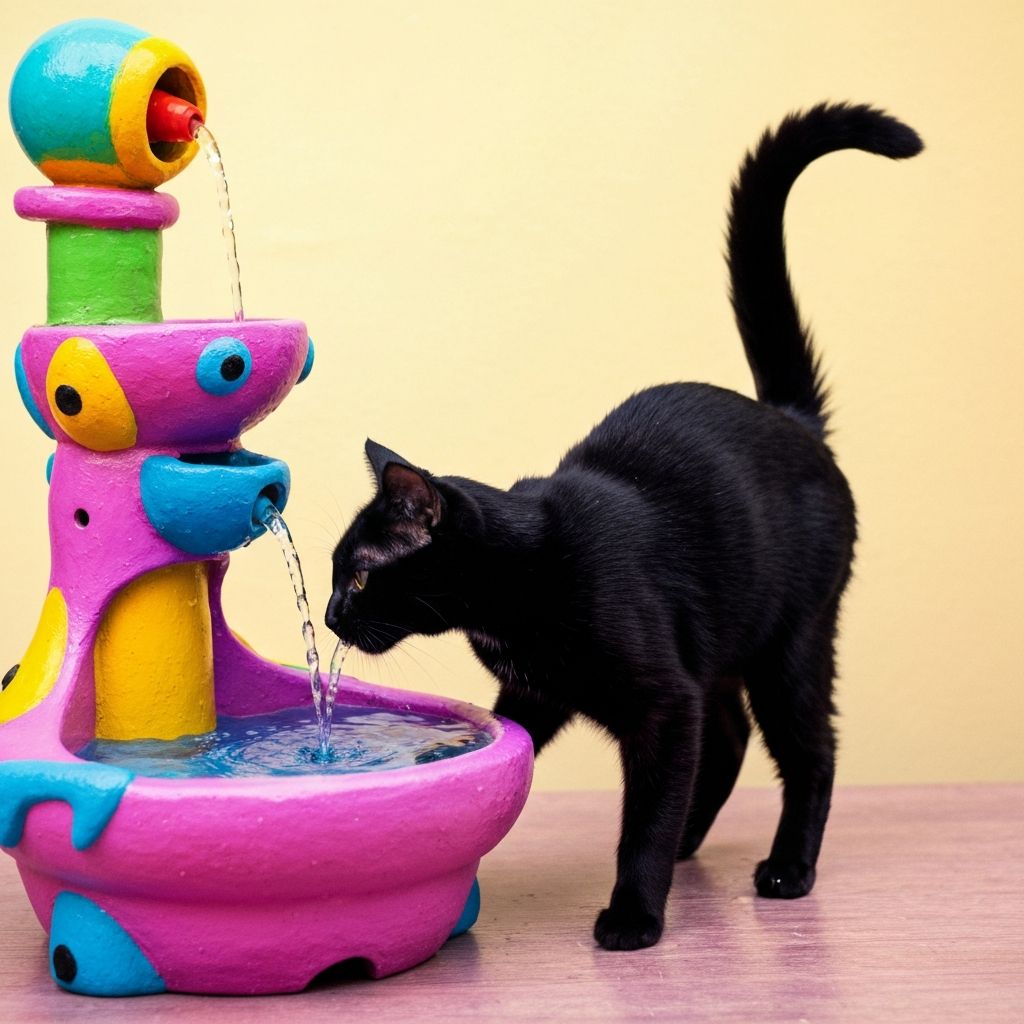
Feline Hydration Guide: Choosing the Best Water Fountain for Your Cat
Veterinary nutritionist explains the importance of proper hydration for cats. Learn how to select the right water fountain and encourage healthy drinking habits to prevent urinary issues.
Feline Urinary Health: Nutritional Strategies for UTI Prevention
Veterinary nutritionist explains the connection between diet and urinary health in cats. Learn how proper nutrition can prevent recurrent UTIs and support feline urinary tract health.