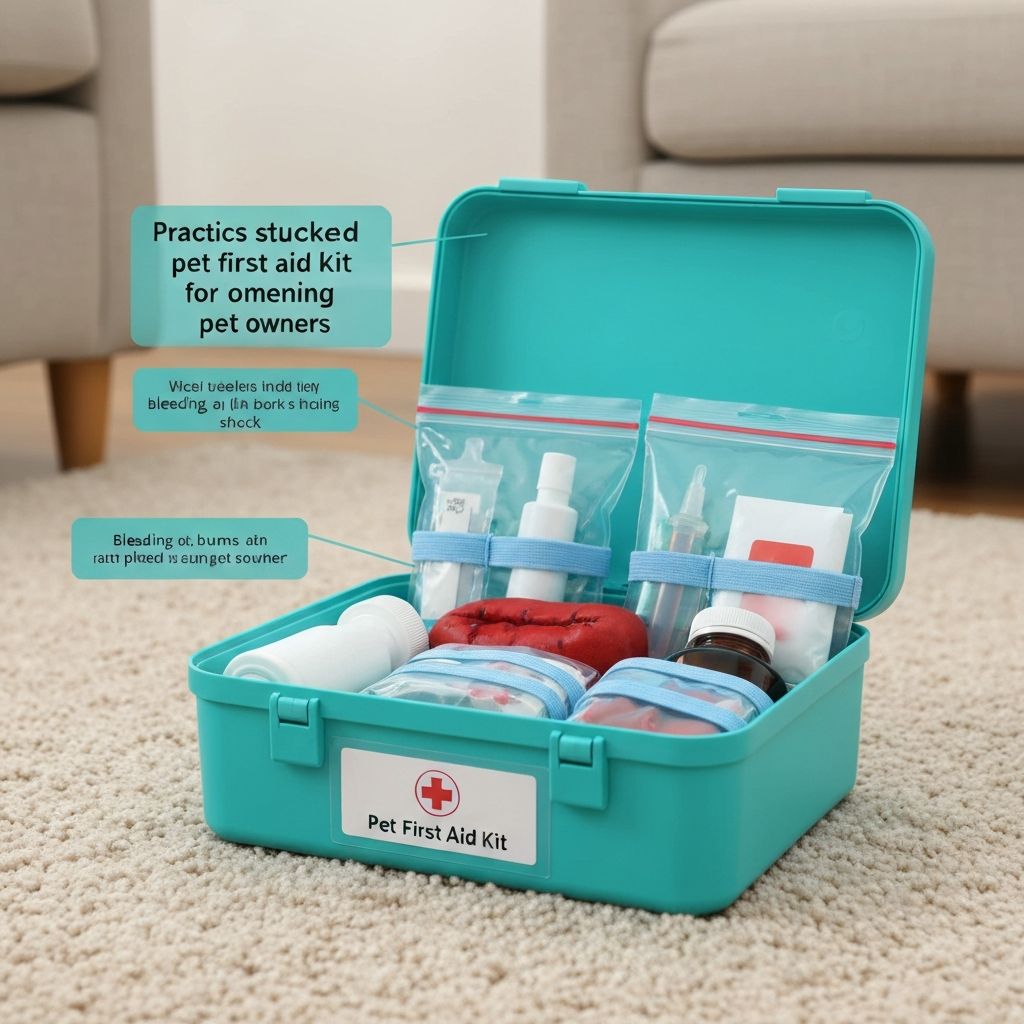
Pet Emergency Preparedness: Building Your First Aid Kit and Skills
Veterinarian provides comprehensive guidance on pet emergency preparedness. Learn what to include in your pet first aid kit and essential skills every owner should know.
Pet First Aid Essentials
Being prepared for pet emergencies can save your pet's life. A well-stocked first aid kit and basic knowledge enable you to respond effectively to common situations.
Essential First Aid Kit Contents
Medications & Topicals
- Hydrogen peroxide (inducing vomiting)
- Antibiotic ointment
- Anti-diarrhea medication
- Pain reliever (vet-approved)
- Antiseptic wipes
- Gauze pads and bandages
- Elastic bandage wrap
- Cotton balls
- Tweezers (for splinter removal)
Tools & Equipment
- Thermometer
- First aid manual
- Latex gloves
- Scissors (blunt-tipped)
- Eye dropper
- Stethoscope (optional)
Emergency Supplies
- Carrier or travel crate
- Leash and muzzle
- Blanket
- Emergency contact list
- Pet medical records
Common Pet Emergencies
Choking
- Look for object in mouth
- Perform heimlich: sharp upward thrust to abdomen
- Bring to vet immediately
- Monitor breathing carefully
Bleeding
- Apply direct pressure with gauze
- Hold for 5-10 minutes
- Don't remove gauze if bleeding continues
- Seek veterinary care
Poisoning
- Identify the toxin if possible
- Call poison control
- Don't induce vomiting without guidance
- Go to emergency vet immediately
Heatstroke
- Cool pet gradually with cool (not cold) water
- Use wet towels
- Never use ice
- Bring to vet immediately
Shock
- Keep pet warm with blanket
- Minimize movement
- Keep pet calm
- Rush to emergency vet
Wounds & Cuts
- Stop bleeding with pressure
- Clean with antiseptic
- Apply antibiotic ointment
- Bandage if needed
- Watch for infection
Critical Emergency Numbers
- Your veterinarian's phone number
- After-hours emergency vet clinic
- Animal poison control
- Local animal hospital
When to Seek Emergency Care
Get immediate veterinary attention for:
- Severe bleeding
- Suspected poisoning
- Difficulty breathing
- Loss of consciousness
- Severe trauma
- Inability to urinate or defecate
- Seizures
- Severe vomiting or diarrhea
First Aid Limitations
Remember: First aid is a bridge to professional care, not a replacement. Always consult your veterinarian for proper diagnosis and treatment.
Regular Preparation
- Update emergency contact list quarterly
- Refresh kit supplies annually
- Take a pet first aid course
- Know your nearest emergency vet
- Practice staying calm
Being prepared enables you to respond confidently in emergencies!
Key Highlights
- ✓Assemble and maintain first aid kit
- ✓Learn CPR for your pet
- ✓Know when to seek emergency care
- ✓Keep emergency vet contact information
- ✓Stay calm during emergencies
Related Guides

Managing Feline Stress and Anxiety: A Veterinary Behavior Guide
Veterinary behaviorist explains how to recognize and manage stress in cats. Learn about environmental enrichment, pheromone therapy, and behavior modification techniques for anxious felines.

Puppy Potty Training: A Step-by-Step Guide to Success
Certified dog trainer provides a comprehensive guide to potty training puppies. Learn about crate training, scheduling, positive reinforcement, and troubleshooting common house training issues.

Exotic Pet Habitat Design: Creating Optimal Living Spaces
Exotic animal veterinarian explains how to design proper habitats for small mammals. Learn about space requirements, environmental enrichment, safety considerations, and species-specific needs.