Rabbit Habitat Design: Veterinary Guidelines for Optimal Living Space
Written By

Exotic Animal Veterinarian
Medically Reviewed By
Exotic Animal Veterinarian
Sources
- [1]House Rabbit Society Veterinary Guidelines
- [2]Journal of Exotic Pet Medicine: Lagomorph Husbandry
- [3]Association of Exotic Mammal Veterinarians (AEMV) Standards of Care
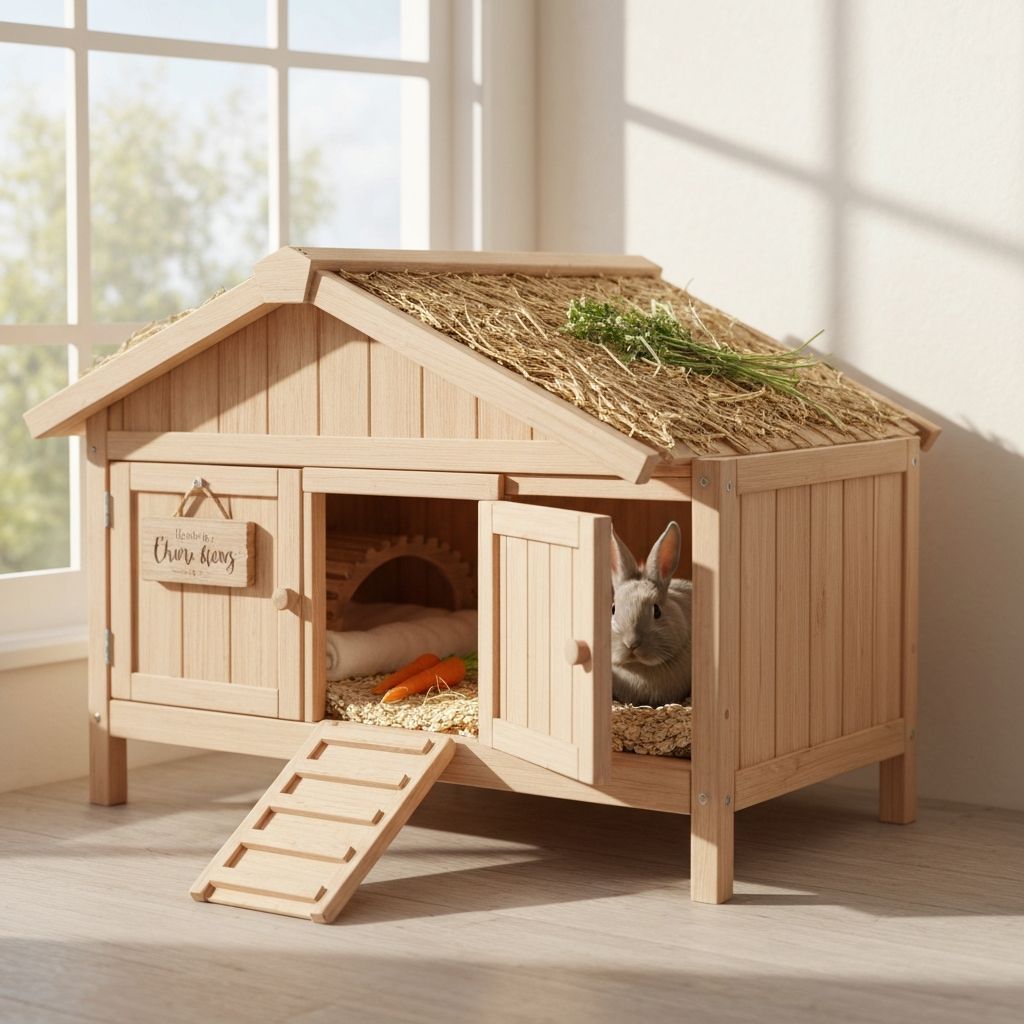
Key Takeaways
Exotic animal veterinarian explains proper rabbit housing requirements. Learn how to create an enriching environment that supports physical health and natural behaviors.
The day I brought Thumper home
I'll never forget the day I brought Thumper home. He was a tiny, fluffy white rabbit with big brown eyes that seemed to look right through me.
I was so excited to have him. I'd done some research, but I had no idea what I was getting myself into.
My first mistake: the cage
My first mistake was buying a cage that was too small. I thought the cute little hutch at the pet store looked perfect for him.
But within a week, Thumper started showing signs of stress. He was lethargic, not eating as much, and he'd stopped doing those cute little binkies (rabbit jumps) that I loved so much.
I did more research and learned that rabbits need a lot more space than I thought. Even a small rabbit like Thumper needs at least 30 square feet of usable space!
I went out and bought a much larger pen, and Thumper immediately seemed happier. He started running around more, doing zoomies, and binkying all over the place.
My second mistake: the flooring
My second mistake was using wire flooring in Thumper's cage. I thought it would be easier to clean.
But after a few weeks, I noticed that Thumper was limping. I took him to the vet, who told me he had sore hocks from standing on the wire floor.
I immediately switched to solid flooring, and Thumper's feet got better within a few weeks.
My third mistake: not enough enrichment
My third mistake was not providing enough enrichment for Thumper. I thought a few toys would be enough.
But Thumper started chewing on the cage bars and digging at the carpet outside his pen. I realized he was bored.
I started providing more enrichment: cardboard boxes to chew on, tunnels to explore, and a digging box filled with shredded paper.
Thumper loved the new toys, and he spent hours playing with them.
My fourth mistake: not considering temperature
My fourth mistake was not considering the temperature. I kept Thumper's cage near a window, thinking he'd like the natural light.
But during the summer, the room got really hot. Thumper started panting and seemed lethargic.
I moved his cage to a cooler part of the house, and he immediately perked up.
The perfect rabbit paradise
After making all these mistakes, I finally created what I like to call Thumper's Paradise.
Here's what it includes:
-
A large pen: Thumper has a 40 square foot pen with solid flooring.
-
Multiple levels: The pen has two levels connected by a gentle ramp, so Thumper can climb and explore.
-
Plenty of hiding spots: Thumper has several hideaways where he can retreat when he's feeling stressed or just wants some alone time.
-
Lots of enrichment: Thumper has a variety of toys, including tunnels, chew toys, and a digging box.
-
A comfortable temperature: The pen is in a cool, quiet part of the house, away from direct sunlight and drafts.
-
Space to exercise: Thumper gets at least 4 hours of exercise outside his pen every day in a rabbit-proofed room.
The rewards
Creating Thumper's Paradise has been so rewarding. Thumper is now a happy, healthy rabbit who loves to play and interact with me.
He greets me at the door of his pen every morning, and he does binkies whenever I come home from work.
I've learned so much about rabbit care since bringing Thumper home. I've made mistakes, but I've also learned from them.
If you're thinking about getting a rabbit, here's my advice:
-
Do your research: Learn about rabbit care before bringing one home.
-
Get a large pen: Rabbits need more space than you think.
-
Use solid flooring: Wire flooring can cause foot injuries.
-
Provide plenty of enrichment: Rabbits are intelligent animals who need mental stimulation.
-
Consider the temperature: Rabbits are sensitive to heat.
-
Give them plenty of exercise: Rabbits need several hours of exercise every day.
Thumper has brought so much joy to my life. He's more than just a pet – he's a member of my family.
I'm so glad I took the time to create the perfect habitat for him. It's been worth every bit of effort.
Key Topics
Related Articles

Complete Hamster Care Guide: Habitat, Diet, and Health Essentials
Exotic animal veterinarian shares expert guidance on hamster care. Learn about proper cage size, safe bedding, balanced nutrition, and how to keep your hamster healthy and happy.

African Grey Parrot Training: Expert Techniques for Vocal Learning and Bonding
Avian behavior specialist shares evidence-based parrot training methods. Learn how to teach your African Grey vocalizations and build trust through positive reinforcement techniques.
Rabbit Housing and Enrichment: A Veterinary Guide to Optimal Environment
Exotic animal veterinarian explains proper rabbit housing requirements. Learn how to create an enriching environment that promotes physical health and psychological wellbeing for your bunny.